Showing posts with label philippine navy. Show all posts

Tuesday, May 22, 2018

Saab to deliver Sea Giraffe radars for Philippine Navy frigates

Defense technology company Saab says it has been awarded a contract to deliver its Sea Giraffe AMB naval radar system to the Philippine Navy.


The radars, in addition to the company’s 9LV for radar control and display for enhanced situational awareness, will be installed on two Philippine Navy frigates: BRP Gregorio del Pilar (FF-15) and BRP Ramon Alcaraz (FF-16).

The systems are being delivered through a Foreign Military Sales (FMS) deal between the US and the Philippines.

Photo by Philippine Navy


BRP Gregorio del Pilar and BRP Ramon Alcaraz are former US Coast Guard Hamilton-class cutters, transferred to the Philippines in 2011 and 2013, respectively. A third Hamilton-class cutter, former USCGC Boutwell, was transferred to the Philippines in 2016 and was christened by the Philippine Navy as BRP Andres Bonifacio.

“With Sea Giraffe AMB currently part of three separate US Navy programs, this contract further strengthens Saab’s position as a trusted supplier for the US Navy. We are proud that our world-class naval radar meets the USN’s standards and needs,” said Anders Carp, Head of Saab business area Surveillance.

Saab is currently delivering its Sea Giraffe AMB to five classes of US Navy surface ships as a part of three separate US Navy programs.

To date, Sea Giraffe has been installed on six littoral combat ships, LCS 2 through LCS 12. Additional systems are in various stages of manufacturing and testing to meet LCS construction schedules.

In October 2017, the US Navy announced it will deploy Sea Giraffe AMB on the US Coast Guard’s newest class of ship, the Offshore Patrol Cutter (OPC). Additionally, Saab is developing a derivative of Sea Giraffe AMB, known as AN/SPN-50, to meet the US Naval Air Systems Command’s air traffic control requirements on aircraft carrier and amphibious assault class ships.

Article Source: NavalToday.com

Sunday, May 20, 2018

Protecting The Philippine Rise (Benham Rise)

The Philippine Rise, also known as Benham Rise, has been the hot topic lately. While the Philippine government is trying to show and assure that the country has sovereignty over the Philippine Rise, the Armed Forces of the Philippines in general is starting to make headway that it is capable of keeping that posture of Philippine sovereignty of the Philippine Rise.


BRP Gregorio Velasquez committed to help in Philippine Rise studies


BRP Gregorio Velasquez (AGR-702) is capable of conducting oceanographic and hydrographic surveys. (PNA photo by Benjamin Pulta)

The BRP Gregorio Velasquez (AGR-702) will commit to help Filipino scientists in conducting further research off the 13-million-hectare Philippine Rise.

This was disclosed by Defense Undersecretary Cardozo Luna during the first anniversary of the renaming of the Philippine Rise in Casiguran off Aurora province on May 16.

Luna said this is in line with President Rodrigo R. Duterte's order that all available support be provided to Filipino scientists tasked to conduct additional studies off the Philippine Rise.

"I understand (that) the BRP Gregorio Velasquez is already here. She is our research ship. I will tell (Defense) Secretary Delfin Lorenzana that I am committing her to you and you can use her anytime," Luna said in Filipino.

The ship is capable of conducting oceanographic and hydrographic surveys.

The BRP Gregorio Velasquez (formerly the R/V Melville) is one of the two ex-American ships pledged by then president Barack Obama during his visit to the Philippines during the APEC Leaders Summit in November 2015.

The other ship is the USCGC Boutwell, which is now renamed to BRP Andres Bonifacio (FF-17) – the third Hamilton-class cutter of the Philippine Navy (PN).

The BRP Gregorio Velasquez was commissioned into the PN service in June 2016. In 1976, then R/V Melville was used in the movie “King Kong” starring Jessica Lange because of its Hypoid propulsion drive capability to move sideways. This type of drive is used on research vessels for station-keeping in the ocean over drill and coring sites.

As per policy, auxiliary research vessels are to be named after national scientists, hence her namesake, Dr. Gregorio Velasquez – a pioneer in Philippine phycology, a branch of science pertaining to the study of algae and seaweeds.

Velasquez was named an academician in 1978 and conferred as National Scientist in 1982.

He was also conferred with a Distinguished Science Medal and Diploma of Honor from the Republic of the Philippines (1956), the John Simon Guggenheim Memorial Foundation Fellowship (1956-57), Men of Science, Division of Biological Sciences in 1969, World's Who's Who in Sciences in 1970, and the Republic of the Philippines Cultural Heritage award in 1972.

While BRP Velasquez is the sole MSR vessel of the Navy, it is not the only one that can assist the team of scientists. The mapping of the area was done by two multidisciplinary vessels – BRP Hydrographer Presbitero and BRP Hydrographer Ventura of the National Mapping and Resources Information Authority (NAMRIA) while key MSR sorties have been utilizing M/V DA BFAR (Bureau of Fisheries and Aquatic Resources).

Activities for the first year anniversary of the renaming of the Philippine Rise started with a send-off ceremony for the marine scientists by President Duterte at the mouth of Casiguran Bay and the signing of Presidential Proclamation declaring Portions of the Philippine Rise as Marine Resource Reserve Area.

These events were highlighted by an on-deck flag raising ceremony at BRP Davao del Sur (LD-602), simultaneous with the laying of underwater flag marker at 47 feet below sea level (shallowest part of Philippine Rise). The activities were documented by an underwater video conducted by geologists of the Department of Environment and Natural Resources-Mines and Geosciences Bureau using a remotely-operated vehicle.

This was followed by the casting of the first buoy off the Philippine Rise.

The one-ton buoy was made of fully urethane foam with a stainless body attached to a five-ton concrete anchor by a 40 mm. fully ethylene rope.

It was designed in Malabon but was fabricated in San Fernando, Pampanga for 10 days from April 2, 2018.

A transponder costing PHP85,000 was also attached to the buoy to determine its exact location.

Article source: Philippine News Agency (May 18, 2018)


Northern Luzon Command Head eyes port improvements to enhance PH Rise patrols


In order to enhance the country's capabilities to protect the Philippine Rise (formerly Benham Rise), Northern Luzon Command (Nolcom) head Lt. Gen. Emmanuel Salamat is looking at the possibility of upgrading the various ports near the above-mentioned territory.

He made this statement when asked on whether there are plans to construct a naval facility in Casiguran, Aurora, the landmass nearest to the 13-million-hectare Philippine Rise.

The Nolcom chief was aboard BRP Davao Del Sur (LD-602), the lead ship of the Filipino flotilla tasked to arrange the commemoration of the first anniversary of President Rodrigo Duterte's Executive Order 25 which renamed Benham Rise to Philippine Rise on May 16, 2017.

The BRP Davao del Sur was joined by eight ships from the Navy, Coast Guard and Bureau of Fisheries and Aquatic Resources (BFAR).

Two FA-50PH jet fighters, a Coast Guard Islander plane and a Navy C-90 patrol aircraft also made a series of fly-by during the dropping of a buoy where a Philippine tricolor was drawn.

"As of now, I don't have an idea except that they have a proposal to, I myself have (a) proposal (to) upgrade and capacitate (the) development of our port facilities so that they can sustain (our) rotational presence here in Philippine Rise," Salamat said.

"Without port facilities, our ships, our maritime (patrol vessels) cannot sustain sustain longer (operations) in the seas," he added.

He admitted, though, that these proposals, should they near fruition, need a considerable amount of resources.

The Philippine Rise buoy laying and flag-raising mission, he said, will set the tempo on more patrols in the area.

"Of course as (soon) as the requirements (we need) are (provided as soon as possible to) Nolcom and (Area Task Force North) in coordination with other maritime agencies like the Philippine Coast Guard, the BFAR, we will continue our rotational presence in Philippine Rise," the Nolcom chief said.

Article Source: Philippine News Agency (May 17, 2018)

Area Task Force-North to cast first buoy, lay flag marker in PH Rise Wednesday


The Area Task Force North (ATF-North) is set to cast the first buoy and lay a flag marker at the shallowest point of the Philippine Rise (formerly Benham Rise) on May 16.

A fleet from the ATF-North, headed by Northern Luzon Command (NOLCOM) Lt. Gen. Emmanuel Salamat, will sail to the underwater feature following President Rodrigo Duterte’s send-off of a team of Filipino marine researchers to the maritime area on Tuesday.

The event will kick off with a flag raising ceremony onboard the BRP Tarlac which will be simultaneously held with the laying of a flag marker by volunteer Filipino divers at the shallowest point of the undersea region while waving their Philippine flags underwater.

Various agencies conducting the Maritime Air Patrol will also hold a fly-by of aircrafts. This will be done twice, during the singing of national anthem and at the end of the program proper.

Defense Secretary Delfin Lorenzana will be the keynote speaker at the event.

The program will end with the casting of the buoy above the flag marker laid by divers.

The buoy, which was crafted by the Bureau of Fisheries and Aquatic Resources, was designed based on international standards.

"This undertaking simply reveals to our fellowmen that in unity, we are strong, and that we are passionate in defense and protection of our sovereignty." Salamat noted.

"With the grace of Almighty God, we are blessed as a maritime nation, our country the Philippines, and the whole Filipino nation." he added.

ATF-North is an inter-agency coordinating body in charge of planning and execution of government programs in relation to maritime domain awareness, maritime security patrols and maritime presence over the Bajo de Masinloc in the West Philippine Sea, Luzon Strait in Batanes Province and the Philippine Rise east of Aurora Province.

The Armed Forces of the Philippines, together with other government agencies like the Philippine Coast Guard, Philippine Marines, Philippine National Police, Department of Environment and Natural Resources, Department of Interior and Local Governments and the Bureau of Fisheries and Aquatic Resources, formed ATF-North to safeguard national interests in the West Philippine Sea. Specifically, the Northern Luzon Command of the Armed Forces of the Philippines leads the inter-agency organization.

On May 16, 2017, President Duterte signed Executive Order No. 25 changing the name of the undersea feature to Philippine Rise.

“The Benham Rise Region is subject to sovereign rights and jurisdiction of the Philippines pursuant to relevant provisions of the 1987 Philippine Constitution, national legislation, and the UNCLOS and applicable international law,” the EO 25 stated.

In 2012, the United Nations, through recommendations of Commission on the Limits of the Continental Shelf, approved the Philippines’ claim that the Philippine Rise is within the country’s 200-nautical-mile exclusive economic zone.

The Philippines first sought recognition for its claims to the Philippine Rise on April 8, 2009.

Article Source: Philippine News Agency (May 15, 2018)

Corrected as President Duterte didn't jet skied at the Philippine Rise.

Thursday, May 17, 2018

Philippine Navy Contingent Returns Home from Exercise Komodo 2018

PH Navy contingent returns home from naval exercise in Indonesia

Photo by Philippine Navy

The Philippine Navy (PN) accorded a fitting arrival and welcome ceremony on May 16 at Pier 13 South Harbor, Manila for the returning more or less 200-man contingent onboard BRP Gregorio Del Pilar (FF15) after the successful participation in the 3rd Multilateral Naval Exercise codenamed, KOMODO 2018 on May 4 to 9, 2018 at Lombok Island, West Nusa Tenggara, Indonesia.

Photo by Philippine Navy


The PN’s participation in KOMODO 2018 was another big leap in enhancing and advancing the organization’s core competency and operational capabilities of surface assets in naval operations to multilateral level, thereby increasing readiness and interoperability. Further, it was an opportunity to showcase that the PN can keep up with its counterparts in the conduct of various naval exercises and maritime operations.

Friday, May 04, 2018

Philippine Navy receives Spike ER System

Philippine Navy gets first missile system for patrol boats

Photo from israeldefense.co.il

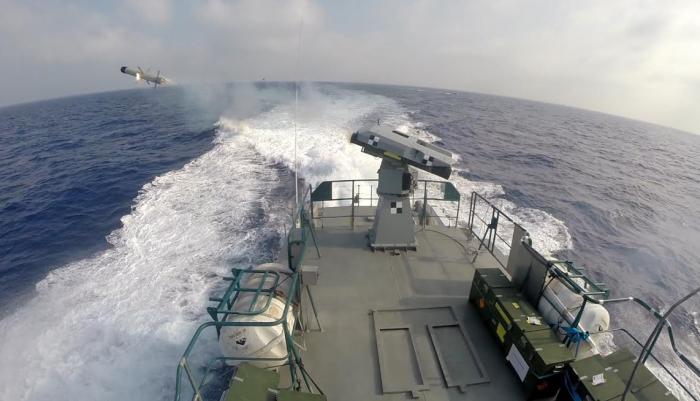
The Philippine Navy (PN) has received its first-ever missile system from Israeli weapons manufacturer Rafael Advanced Defense Systems, Defense spokesperson Arsenio Andolong confirmed Wednesday.

Andolong said the Spike-ER surface-to-surface missiles along with its launchers have arrived third week of April.

Andolong said the weapons are now being "integrated" or installed on the Navy's three brand-new MPACs or multi-purpose attack craft with the guidance of Rafael personnel. The three MPACs were activated in May 22, 2017.

After the installation, the Spike-ER missile systems will then undergo Technical Inspection and Acceptance Committee, Andolong added.

"The missile-equipped MPACs will greatly enhance the Navy's capability to secure our littoral areas against terrorism and in support of maritime law enforcement operations," the defense spokesperson said.

The missile system was procured under the Armed Forces' Horizon One modernization program.The Spike-ER missiles are capable of penetrating 1,000 mm (39 inches) of rolled homogeneous armor. The missiles will give the PN a much needed firepower in dealing with surface threats whether these are small or large ships.


Article source: Philippine News Agency

Wednesday, May 02, 2018

Philippine Navy participates in Indonesia's Multilateral Naval Exercise Komodo

Philippine Navy multilateral capability to be boosted by 'Komodo' drills


File photo of PF-15 BRP Gregorio Del Pilar


The Philippine Navy’s (PN) ability to operate at the multilateral level is expected to be boosted by its participation in the Indonesian Navy's "Multilateral Naval Exercise Komodo" that will take place on May 4-9.

"The PN’s participation in this undertaking is expected to advance its maritime operational capability to multilateral level, thereby increasing readiness and interoperability and enabling the nation’s premiere maritime force to be more effective and efficient in the conduct of its mandated task," Navy spokesperson Capt. Lued Lincuna said Friday.

The PN deployed the BRP Gregorio Del Pilar (FF-15), one of the three ex-Hamilton class cutters in service, and about 300 naval personnel to participate in the "Komodo".

The same vessel participated in the "Komodo" naval drills back in 2014. It departed Pier 13, Manila South Harbor Friday morning and is expected to arrive at the Port of Lembar, Indonesia by May 4.

Exercise "Komodo" 2018 is the third multilateral naval exercise that will be hosted by the Indonesian Navy.

It aims to enhance the relationship and cooperation among participating navies in building common understanding about humanitarian assistance disaster response operations and will also focus on maritime interdiction operation.

Lincuna said an estimated 30 regional and non-regional navies from different countries will join this naval exercise.

It will be executed ashore, as sea and air assets, and special operations teams from participating navies will conduct combined maneuvers to address various contingencies at sea.

Exercises ashore include workshops, sports program, cultural performances, maritime exhibitions, engineering civic action projects, and medical and civic action projects.

The final day will see a field training exercise and a sail pass.Lincuna said this multilateral naval exercise is a platform on how the PN and other navies in the region can cooperate and work together to address shared maritime security priorities through the development of combined naval tactics, techniques and procedures.


Article source: Philippine News Agency

Saturday, April 07, 2018

The Philippine Navy's Frigate Acquisition Project Update

Steel cutting for 2 frigates starts April 30

Image by Hyundai Heavy Industries

 The steel cutting for the two missile-armed frigates, which is under contract with South Korean shipbuilder Hyundai Heavy Industries (HHI), is expected to start on April 30.

"The next significant milestone will now be the ceremonial steel cutting, which will likely be held on April 30 at the HHI Complex in Ulsan, South Korea, to be attended by a delegation from DND/PN (Department of National Defense/Philippine Navy) to mark this important milestone," Navy spokesperson, Capt. Lued Lincuna, said Thursday.

Steel cutting signals the official start of a vessel’s construction.

Tuesday, March 27, 2018

Philippine Navy needs to further develop maritime surveillance

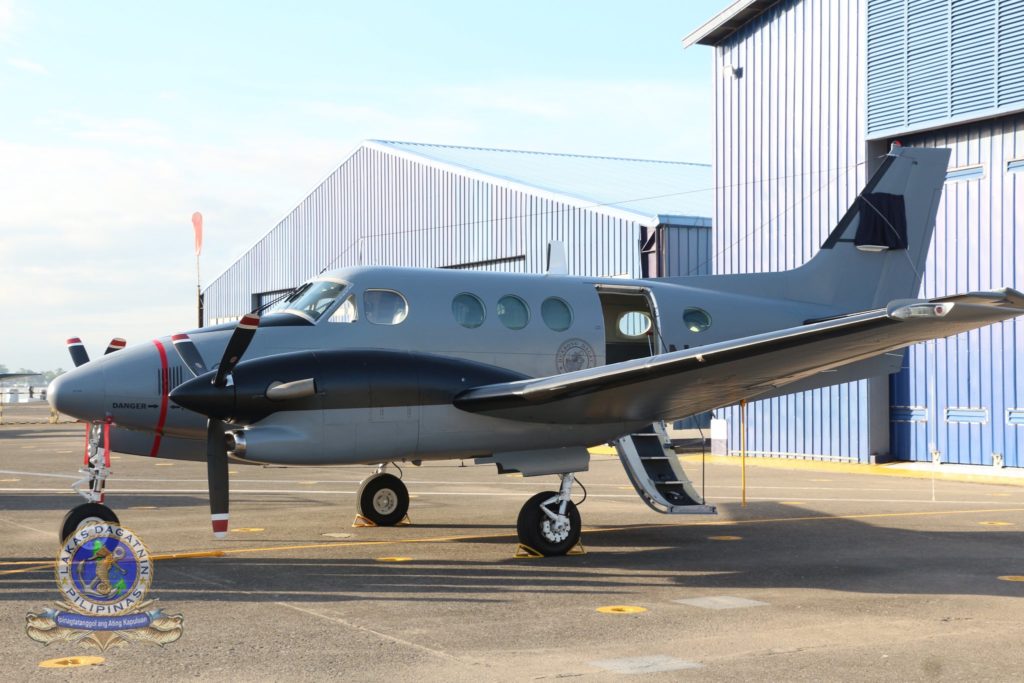
Beechcraft King Air TC-90 patrol plane. (Photo by Priam F. Nepomuceno)

With the Philippines having massive maritime domains, the Philippine Navy (PN) needs to further develop its maritime surveillance capability to fully secure its territorial waters.

This was emphasized by PN flag-officer-in-command Rear Admiral Robert Empedrad during the turn-over ceremony of the three Beechcraft King Air TC-90 aircraft donated by the Japanese government on Monday.

Saturday, March 17, 2018

Philippine Navy retires BRP Rajah Humabon (PS 11)

Philippine Navy retires WW II-era BRP Rajah Humabon from service


By Mass Communication Specialist 2nd Class Mark R. Alvarez [Public domain], via Wikimedia Commons

After 38 years of service, the Philippine Navy (PN) has formally retired its oldest warship, the BRP Rajah Humabon (PS-11), one of the last World War II-era warships still in active service, during short ceremonies in Sangley Point, Cavite Thursday morning.

This was confirmed by Philippine Fleet spokesperson Lt. Sahirul Taib in a message Thursday.

The retirement of BRP Rajah Humabon is in-line with the Navy's Strategic Sail Plan of "moving to legacy vessels to more and capable and modern vessels," he added.

As of this posting, the Navy is awaiting the completion and delivery of two missile-armed frigates from South Korean shipbuilder Hyundai Heavy Industries.

The contract is worth PHP18 billion, including weapon systems and munitions, with the delivery of the first ship expected by 2020.

Once commissioned in Philippine service, the frigates will give the Philippine Navy an anti-air, anti-surface, anti-submarine and electronic warfare capability.

The decommissioning is also in line with Defense Secretary Delfin Lorenzana's directive to retire the Navy's remaining World War II-era warships due to their old age which also requires expensive maintenance.

"Yes, my directive is to fast track the decommissioning of World War II vintage ships. They are old and uneconomical to maintain," Lorenzana added.

Prior to the arrival of the BRP Gregorio Del Pilar (FF-15) in 2011 and BRP Ramon Alcaraz (FF-16) in 2013, the BRP Rajah Humabon together with the three Jacinto-class patrol vessels (formerly the Royal Navy's Peacock class patrol ships) served as the backbone of the PN and acted as its flagship.

It also served a ceremonial ship welcoming arriving foreign warships in Manila Bay. BRP Rajah Humabon started life as the US Navy destroyer escort, the USS Atherton (DE-169), in 1943.

She was mostly assigned at the Atlantic theater doing patrols and anti-submarine missions.

The USS Atherton was credited of having destroyed a German U-boat, the U-853 off the coast of Rhode Island, on May 9, 1945.

She served in the Pacific theater in the middle of 1945 until she was decommissioned and placed in reserve on Dec. 10 of the same year.

The ship was later was transferred to the Japanese government as JDS Hatsuhi (DE-263) on June 14, 1955. Together with her sister ship JDS Asahi (DE-262), they became one of the first warships of the newly-organized Japan Maritime Self-Defense Force.

As new ships became available to the JMSDF, both ships were decommissioned and returned to the US Navy on June 1975.

Laid-up in Japan, she was transferred to the Philippine government on Sept. 13, 1976 and was sold as an Excess Defense Article on Dec. 23, 1978.She was then renamed as the RPS Rajah Humabon (PS-78), and was towed to South Korea for an extensive refit and modernization in 1979.

Article Source: Philippine News Agency

http://bit.ly/Security_Bank_Philippines

Wednesday, February 28, 2018

New Naval Station to rise in Sulu


The Philippine Navy is constructing a new naval station to boost the security in the province of Sulu.

The new naval station will soon rise in Barangay Bual, Luuk, a third class town of Sulu province.


https://wgaffiliate.com/?a=1363&c=4734&s1=philippinestodayblog

The municipal government of Luuk headed by Mayor Allayon Arbison Jr. donated three-hectare property to the Philippine Navy, which will be used as the site for the naval station in the area.

A Memorandum of Agreement (MOA) and Deed of Donation was signed by Rear Adm. Rene Medina, Naval Forces Western Mindanao (NFWM) commander, Mayor Arbison, and Sulu second district Rep. Munir Arbison, to formally turn over the property.

The NFWM said in a statement that the groundbreaking ceremony for the construction of the naval station was held last Friday, February 23.

The signing of the MOA and Deed of Donation as well as the groundbreaking ceremony was held together with the “All-In-One Medical and Dental Mission” organized by Marine Battalion Landing Team 1 (MBLT-1) in partnership with Joint Task Force Sulu and other concerned stakeholders.

http://bit.ly/Security_Bank_Philippines


Article source: PTV News

Tuesday, February 27, 2018

Hyundai selects SMASH 30 mm naval gun system for Philippine Navy frigates [old news]

Hyundai selects Turkish 30 mm naval gun system for Philippine Navy frigates


The Philippine Navy’s (PN’s) new frigates will be equipped with the SMASH 30 mm remote controlled stabilized naval gun system from Turkish defence systems provider, Aselsan, an official from the company confirmed with Jane’s on 20 November.

A mock-up of Aselsan's SMASH 30 mm remote controlled naval gun system on display at LIMA 2017 in Langkawi. (IHS Markit/Ridzwan Rahmat)

Each frigate will be equipped with one SMASH 30 mm system as a secondary weapon, and the system will be fully integrated with the platform’s combat management system (CMS), said the official. Jane’s understands that the weapon will be situated in the platform’s stern section, facing its flight deck.


South Korean shipbuilder Hyundai Heavy Industries (HHI) won a contract in 2016 to supply the PN with two 2,600-tonne frigates that derive its design from the Republic of Korea Navy’s (RoKN’s) Incheon (FFX-I) class. Besides the 30 mm gun system, the warship is also expected to be equipped with an eight-cell vertical launching system (VLS) installed at the forward section, and a 76 mm naval gun.

http://bit.ly/Security_Bank_Philippines


According to specifications provided by Aselsan, the SMASH system is fitted with a 30 mm Mk 44 Bushmaster-II cannon that can fire up to 200 rounds/minute, and can be operated either via an operator console or in automatic tracking mode.

The system can be equipped with an electro-optic sight package containing a thermal camera, a video camera, and laser range finder, and also operate in surveillance mode to improve the platform’s situational awareness. The turret can be fed via two separate ammunition stowage lines.

https://wgaffiliate.com/?a=1363&c=4734&s1=philippinestodayblog

Article source: Janes.com

Wednesday, January 03, 2018

2 deliveries in 2018 to beef up Philippine Navy's capability

Two more platforms which will help boost the Philippine Navy (PN)'s capabilities to defend the country's vast maritime domains are expected to be delivered this 2018. This was bared by Defense spokesperson Arsenio Andolong when sought for an update on other deliverable items for the PN this year.

3 MPAC mk3's with Spike ER System

This has been discussed already in the AFP Modernization 2017 Highlights article.  

First among the deliverables is the Rafael Advanced Defense Systems Ltd's Spike ER (extended range) missile systems which will be fitted on three of the Navy's brand-new multi-purpose assault craft (MPAC) which was activated last May 22.

The weapons are on anti-ship mode meaning it can engage surface vessel targets and is capable of penetrating 1,000 mm (39 inches) of rolled homogeneous armor and has a maximum range of five miles. And while not giving the exact dates for the delivery of the missiles and its platforms for security purpose, Andolong said the weapons would be delivered to the country "very early in the first quarter of the year."

The missiles and launchers were supposed to be delivered by December but this did not materialize due to some transportation issues.

AgustaWestland AW-159 "Wildcat"


Philippine Navy AW-159
Photo from Leonardo Company
Second on the deliverables for the Philippine Navy are two brand-new AgustaWestland AW-159 "Wildcat" anti-submarine helicopters which are expected to arrive the last quarter of 2018 and early 2019, Andolong added. He did not further elaborate on what weapons and surveillance systems the AW-159s would be carrying for security reasons.

The above-mentioned helicopters will be based on the two frigates on order from Hyundai Heavy Industries. 

The AW-159 (previously called the Future Lynx and Lynx Wildcat) is an improved version of the Westland Super Lynx military helicopter. It has a crew of two, has a maximum speed of 291 km/h (181 mph), range of 777 km (483 miles), ferry range of 963 km (598 miles) and an endurance of one and a-half hours (fours hours and 30 minutes if fitted with an auxiliary fuel tank).


Original article from the Philippine News Agency

http://bit.ly/Security_Bank_Philippines


Friday, December 29, 2017

Philippine Navy Aids Stranded Passengers in Matnog, Sorsogon

Central Command thru Philippine Navy Aids Stranded Passengers in Matnog, Sorsogon


Report received by higher headquarters revealed the congestion of stranded passengers at Matnog Port, Matnog, Sorsogon and a 7-km long queue of vehicles along the highway leading to Matnog, Sorsogon going to Allen, Samar.

Central Command immediately responded thru Naval Forces Central by sending BRP AGTA (LC 290) to Matnog, Sorsogon, with a mission to ferry the stranded passengers and vehicles to Allen, Samar in order to help decongest the port of Matnog until such time that the RORO transport operation can absorb the influx of passengers and vehicles. BRP AGTA departed Captain Veloso Pier, Naval Forces Central on Wednesday, December 27, 2017 arrived in Matnog Port the next day (December 28, 2017).

After series of coordination with the local government units, Philippine Ports Authority and the Philippine Coast Guard, BRP AGTA ferried one hundred nine (109) passengers to Allen, Samar. They were generally referred to as “chance passengers” and they were the ones who commuted from Manila thru buses in the hope of spending the holidays with their families. Unfortunately, upon their arrival in Matnog Port, tickets were no longer available for them to be ferried to Allen, Samar.

The Navy vessel and the passengers were ably assisted by personnel of 803rd Infantry Brigade, 8ID, Philippine Army. The prevailing weather condition made the ferry mission challenging and difficult as strong winds and current affected the ship’s movement. Nevertheless, BRP AGTA safely arrived in Allen, Samar that same afternoon.


http://bit.ly/Security_Bank_Philippines


Originally posted by Naval Forces Central Facebook Page

Wednesday, December 27, 2017

AFP Modernization 2017: Highlights and Review

The modernization of the Armed Forces of the Philippines was on a roll this year, as we've seen a few big ticket items having completely delivered this year. Game changers as they say, these new assets have proven their capabilities both in combat and humanitarian missions.

Here's a brief on everything what we know about the AFP modernization this 2017.

Philippine Air Force 

FA-50PH


Philippine Air Force FA-50


The final batch of the FA-50PH Lead-In Fighter Trainers have been successfully delivered by the Korean Aerospace Industries last May. The last batch of 2 arrived on May 31st at Clark Air Base. The contract consist of 12 FA-50's at the price of Php 18.9 billion. AFP spokesperson Brig. Gen. Restituto Padilla mentioned on a March 23 article in Inquirer that there are plans to purchase 6 more additional FA-50's if the funding allows it and if the performance is good.

FA-50PH Weapons - AIM-9 Air-to-air Missiles


Aside from the aircraft itself the Department of National Defense also ordered AIM-9 "Sidewinder" missiles from German manufacturer Diehl Raytheon with a contract price of Php 1,016,734,088. The notice to proceed was issued on August 31st. Department of National Defense Public Affairs Office Chief Arsenio Andolong said that these missiles are going to be "factory fresh".

FA-50PH Flight Simulators


The Department of National Defense also ordered flight simulators for the FA-50PH from its manufacturer, Korean Aerospace Industries. The package will consist of a cockpit system, navigation system, video system, manuals, repair parts and support equipment. The delivery is expected in 2019 and contract price is Php 376 million.

6 Super Tucano's for Close Air Support

Philippine Air Force Super Tucano


Last November the DND awarded Brazilian aircraft manufacturer Embraer Defense and Security for the contract to supply 6 light attach aircraft  with a contract price of Php 4.968 billion. Expected delivery will be on 2019. Aside from close air support missions the aircraft's will also be used in surveillance and counter-insurgency missions.

Philippine Navy

Phillippine Navy SSV


Delivery of second Strategic Sealift Vessel

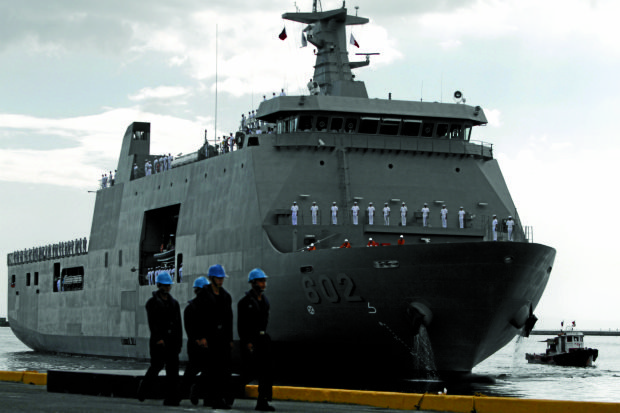
The Philippine Navy's second amphibious landing dock vessel BRP Davao Del Sur LD-602 arrived in May. Based on the Makassar class ships, the Tarlac-class BRP Davao Del Sur was built by PT PAL Indonesia. Contract price for the 2 ships is Php 4 billion. The Tarlac-class of ships can carry up to 500 troops, 2 landing crafts, 3 helicopters, and 2 rigid-hull inflatable boats. Both 601 and 602 have been used in both humanitarian missions and in support of combat operations.


5 TC-90 Beechcraft surveillance aircraft


Philippine Naval Air Group TC-90


Five refurbished TC-90's was donated to the Philippine Navy after bilateral talks with the Japanese Government during the sidelines of the ASEAN summit last November. 2 of the TC-90's are already being operated by the Philippine Navy since March and the remaining 3 will be delivered in the first quarter of 2018.


Additional 3 MPAC Mk 3 


Last May the Philippine Navy activated 3 Mk 3 Multi-Purpose Attack Craft into its inventory. The Php 270 million project was undertaken by Propmech Corporation and Taiwan-based Lung Teh Shipbuilding Corporation.

Spike ER Missile System for the MPAC

Israel's Rafael Advanced Defense Systems Ltd will install Spike Missile systems on an undetermined number of the Navy's MPAC. Scheduled to arrive this December but was postponed and rescheduled for delivery this coming January 2018. The delivery was postponed due to the unavailability of transport assets from the Philippine Air Force as it was focused on humanitarian missions ferrying relief supplies to typhoon affected areas in Visayas and Mindanao.

[UPDATE: added on December 31, 2017] 

The MPAC (Lot 2) Weapons System and Missiles Acquisition Project worth P594,319,550.

According to Defense Update, the Rafael Advanced Defense Systems will make each Remote Weapon System (RWS) operate 12.7 heavy machine guns also and mount Spike-ER launchers. This will extend the boat’s firepower to more than 8 kilometers. These acquisitions are significant because, for the Spike ER, it will be the very first missile system ever to officially enter service with our PN ships.

The new MPAC 3 armed with 4 canister Spike missile launcher and Mini typhoon RCWS.


The report said three Mini Typhoon remotely controlled stabilized gun mounts to arm the MPAC MKIII of the PN. Each will contain 2,000 rounds for 12.7mm, 4,000 rounds for 7.62mm ammunition, and 10 surface-to-surface missile canisters. (source - AsianMilDef)


Aerostat Radar from the US

The United States donated a Tethered Aerostat Radar System (TARS) to the Philippine Navy last August with the purpose of enhancing the Navy's maritime surveillance.

Philippine Army and Philippine Marines

12 Elbit Soltam M-71 155mm Howitzers


The Philippine Army and Philippine Marines have each received 6 brand new M-71 155mm howitzers from Elbit Systems of Israel. Estimated contract price is Php 410 million.

KM450 and KM250 military trucks

KM250


The Department of National Defense signed a government-to-government contract with Korea for military trucks to be used by the Army and Marines. The signing was held last October with an estimated value of about Php 1.4 billion for the Army contract and Php 313 million for the Marines contract.
1 1/4 ton KM450

The Army contract consist of 227 units 1/2 ton KM250 trucks, 10 units 2 1/2 ton KM250 wreckers, while for the Marines it will consist of 108 1 1/4 ton KM450 trucks.


Be always updated, subscribe to our newsletter!


http://bit.ly/Security_Bank_Philippines


Original article posted at Inquirer.net

Saturday, December 23, 2017

Philippine Navy's BRP Tarlac to carry relief supplies to Tacloban - PNA


The Philippine Navy (PN)'s largest ship, the landing platform BRP Tarlac (LD-601), is now getting ready to transport medicines and other relief supplies for "Urduja"-battered Tacloban City.

Photo from Naval Forces Central Facebook Page

"The PN's newest landing dock and largest vessel, BRP Tarlac (LD-601), is getting ready to depart here (Pier 13, Manila South Harbor) once the loading of tons of relief items intended for our countrymen in Visayas Region particularly Tacloban City that have been devastated by 'Urduja' is complete and the sea condition has improved for the vessel's safe navigation," Navy Spokesperson Capt. Lued Lincuna in a message Friday.

Lincuna said personnel from different PN units together with the crew of BRP Tarlac are now completing the hauling and loading of more or less 220 tons of assorted relief items such as food and non-food items like hygiene kits, medical kits, mosquito nets, plastic mats, and solar lamps consolidated by the Department of Social Welfare and Development, Department of Health and National Disaster Risk Reduction and Management Council.

BRP Tarlac is among the most recent acquisitions of the PN which allows the command to efficiently fulfill its duties in the area of humanitarian assistance and disaster response.

The ship has an overall length of 120 meters,breadth of 21 meters, draft of five meters and can carry a payload of 2,800 tons.

It has a cruising speed of 13 knots and maximum speed of 16 knots and a minimum operating range of 7,500 nautical miles.

BRP Tarlac can also carry 500 troops, two rigid-hull inflatable boats, two landing craft units and three helicopters. "It is a manifestation of the PN being always ready and committed in providing prompt assistance to our disaster-stricken countrymen in order to alleviate them from their current ordeals," Lincuna said.

http://bettercards.ph/l/8PaUIXa6GhYniHCML6WXYw/7633ije763meVFqpTOOMbVTH2g/Yhf2VWyu6qbLh5JGtjtUTA


Original article posted here by Philippine News Agency

Saturday, April 30, 2016

‘King Kong’ research ship from US Navy heads for the Philippines

A former US Navy research vessel which was used in a 1976 monster thriller film is on its way to the country as the Philippine Navy’s first oceanographic research vessel.

Image From Wikipedia


The Philippine Navy has formally commissioned into service the 46-year-old US Navy ship to be used for hydrographic surveys and marine scientific research and exploration.

The BRP Gregorio Velasquez was formally turned over by the US Navy to the Philippine Navy last Tuesday in christening and commissioning ceremonies held in San Diego, California. The vessel is expected to arrive in the country in June.

She was formerly the R/V Melville (T-AGOR-14) which was operated by the Scripps Institution of Oceanography.  She was pledged to the Philippines last year.

The 279-feet-long research vessel appeared in the 1976 movie “King Kong” because of its hypoid propulsion drive at that time, which allowed it to move sideways.

As a policy, the Navy names its auxiliary research vessels after national scientists. Dr. Gregorio Velasquez, after whom the ship was named,  was a pioneer in Philippine physiology and was named a National Scientist in 1982.

Navy spokesperson Capt. Lued Lincuna said the ship was due to arrive in the Philippines by the third week of June after setting sail from California on Friday.

The Navy official said the research vessel would be used for hydrographic surveys and marine scientific research and exploration.

“Also, it will enhance our capacity and build our capability to support the environmental protection efforts and exploration of the country for economic purposes,” he said.

https://wgpartner.com/?a=1363&c=1329&s1=philippinestodayblog

Platform for collaboration

“It will also become a platform for interagency collaboration for partners in the academe and thus improve awareness of our subsurface environment,” Lincuna stressed.

In November last year, US President Barack Obama pledged to donate the R/V Melville and the US Coast Guard Cutter Boutwell (WHEC-719) to the Philippine Navy as excess defense articles.

Commodore Narciso Vingson, deputy commander of the Philippine Fleet and defense undersecretary Jesus Millan, a former Navy flag officer in command, received the vessel.

http://bit.ly/Security_Bank_Philippines

---
Inquirer.net

Tuesday, April 26, 2016

Philippine Navy, Army in ASEAN drills

The Philippine Navy and Philippine Army will participate in a security and counter-terrorism drill during the ASEAN Defense Ministers’ Meeting on May 1-12 in Brunei and Singapore.

The Navy’s frigate, the BRP Gregorio del Pilar, will join the 11-day multilateral exercise among members of the Association of Southeast Asian Nations, according to Lt. Cmdr. Marineth Domingo.

The spokesperson said the Navy will represent the country in the maritime security drill, while the Philippine Army will participate in counter-terrorism, land-storming and ground operations.

“It will represent another significant moment of participation and commitment by all 18 countries for practical cooperation,” Domingo said.

Joining the 10 ASEAN members are Australia, China, India, Japan, New Zealand, South Korea, Russia and the United States.

The BRP Gregorio del Pilar will also take part in another drill, the maritime training activity “Seagull” to be held on May 10-17.

---
Inquirer.net

Saturday, August 15, 2015

Philippine Navy christens 2 new choppers, 2 transport ships


THE Philippine Navy christened two brand new armed naval helicopters and two transport ships donated by Australia on Monday.

The joint ceremony was led by Flag Officer in Command Vice Admiral Jesus Millan, hours before he retired as Navy chief, at the Navy Headquarters along Roxas Boulevard. He was replaced by Rear Admiral Caesar Taccad in the afternoon.

Colonel Benifranco Rada, the Naval Chief Chaplain, led the blessing of the ships, which was followed by the unveiling of the vessels’ names and the traditional smashing of bottle of wine for good luck and safe voyage. Bottles of champagne were poured to the nose of the choppers.

The two landing craft heavy vessels donated by Australia were named BRP Ivatan (AT-298) and Batak (AT-299), in recognition of two ethnic groups of Palawan and Batanes.

The ships will be used for transport of personnel and equipment, as well as aid during humanitarian assistance and disaster relief operations.

The two brand new AW109 units, meanwhile, are equipped with caliber 50 machine gun and 2.75-inch rockets and also have maritime air surveillance capability, amphibious-air support operations and weather search radar and forward looking infrared systems.

“These new assets are manifestations of our navy’s optimum readiness to perform its tasks and the ability to adapt vis-a-vis the emergent operating environment. This special occasion likewise signifies the assurance from your navy of renewed strength and vigor in accomplishing our mandates,” Millan said.

Originally posted: 06:48 PM August 10th, 2015 @ Inquirer.net

Saturday, June 06, 2015

Philippine Army, Navy to bid out P50-M projects

The Army and the Navy will hold biddings for close to P50-million worth of military projects.

The Army will spend P13.49 million to buy spare parts of a KM250 truck while the Navy will acquire 3,780 high explosive rounds worth P36.34 million. 

The truck spare parts and explosive rounds will be acquired through the Philippine International Trading Corp., a state-run firm created to secure cost-effective procurement deals. 

The bid notices for the two projects were published in The STAR yesterday. The procurement will be undertaken through open competitive bidding as provided by the implementing rules of the procurement law. 

The Navy project, meanwhile, involves the supply and delivery of 3,780 rounds brand new cartridge 25mm high explosive incendiary- tracer linked. The high explosives will be used for the Navy troops’ security operations.

Prospective bidders may obtain more information about the projects from the Bids and Awards Committee 1 Secretariat at the National Development Corp. building during weekdays.

By Alexis Romero (The Philippine Star) 

Wednesday, January 22, 2014

4 Philippine Navy aircraft deployed

After completing maintenance and repairs, four Navy planes have been deployed in various parts of the country to boost the military’s maritime security efforts.
 
The four islander planes were deployed in a send-off ceremony held last Tuesday at the Naval Air Group headquarters in Sangley Point, Cavite.

Naval Air Group chief Marine Col. Ariel Caculitan, said the air assets went through the mandatory scheduled maintenance inspection that includes the repair and refurbishment of their systems and the retraining of pilots.

“SMIs (scheduled maintenance inspection) are required for all Navy aircrafts whenever they reach a total of 50, 100, 300 and 500 hours of flying time. This is necessary to ensure the safety and capability of our aircrafts when they are deployed in the operational areas,” Caculitan said.

The four planes that were deployed are Philippine Navy Islanders (PNI) 312 in San Fernando City, La Union; PNI311 in Cebu; PNI314 in Palawan; and PNI310 in Zamboanga.

Philippine Fleet spokesman Ltjg. Rommel Rodriguez said the islanders can conduct maritime air Surveillance, air drop, air lift and aerial reconnaissance missions.

Philippine Military Academy Superintendent Vice Adm. Edgard Abogado, who served as guest of honor of the send-off ceremony, said the air assets play a vital role in securing the nation’s maritime domain.

He said the islanders provide the ships with an extended scope of information at sea.

Philippine Fleet Commander Rear Admiral Jaime Bernardino said members of the Naval Air Group worked even during the holidays to ensure the completion of the aircraft maintenance before the deployment.

Each aircraft has two pilots and four maintenance crew. PNI312 is being maneuvered by Navy Lt. Jovy Irignan and Marine 1Lt. Herbert Mananghaya while PNI 314’s pilots are Lieutenants Rolly Bio and Abelardo Ginete Jr.

The pilots of PNI311 are Lieutenants Brandon Belandres and Gerard Martin Dy while PNI310 is being maneuvered by Lt. Jose Pepito Lauron and Marine Cpt. Emmanuel Zamudio.

Article Source: The Philippine Star

Philippine Navy patrol ship aids LPA-battered towns in Davao Oriental


The Philippine Navy (PN) on Wednesday announced that one of its patrol ships, the BRP Magat Salamat (PS-20), has delivered 52 tons of assorted relief goods to low pressure area (LPA) battered towns of Cateel and Baganga in Davao Oriental.

Ensign Herlijk F. Gregorio, Naval Forces Eastern Mindanao spokesperson, said this aid was immediately forwarded to the Department of Social Welfare and Development-Davao for distribution to the affected residents.

At least 186,543 families or 895,572 persons were likewise affected by the LPA in 846 barangays in 15 provinces of Regions 10, 11, CARAGA, and ARMM.

Of the total affected, 55,501 families or 260,478 persons were displaced and served in 585 evacuation centers.

Twenty seven areas were placed under state of calamity, including Agusan Del Norte, Lanao Del Norte, Iligan City, Kapalong, Carmen, Asuncion, New Corella, and Tagum City - all in Davao Del Norte; Tarragona, Manay, Caraga, Baganga, Cateel, and Boston - all in Davao Oriental; Sta. Josefa, Sibagat, Bunawan, San Francisco, Esperanza, Veruela, Trento, and Rosario in Agusan del Sur; Butuan City; and Lianga, Tago, San Miguel, and Bislig in Surigao del Sur.


Estimated cost of damage was pegged at P369,142,178.22, with P128,513,750 to infrastructure and P240,628,428.22 to agriculture.

Article Source: PNA

Featured Posts

AFP Modernization 2017: Highlights and Review

The modernization of the Armed Forces of the Philippines was on a roll this year, as we've seen a few big ticket items having completely...

Popular Posts